



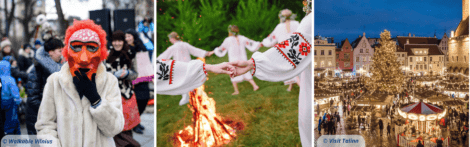
The Baltic States offer distinctive cultural experiences where ancient traditions meet modern creativity. From colorful spring festivals to winter wonderlands and authentic folk celebrations, Vilnius, Riga, and Tallinn provide year-round opportunities for memorable city breaks that go far beyond typical sightseeing.
Lithuania: a calendar of living traditions
Valentine city break (February)
Vilnius offers romantic tales, including the Lithuanian version of Romeo and Juliet—Zygimantas Augustas and Barbora Radvilaite—whose royal crowns were recently discovered in Vilnius Cathedral’s catacombs. City tours featuring royal love stories, classical concerts at the National Opera and Ballet Theater or National Philharmonic, and dining at Ertlio Namas, a Michelin-recognized historic cuisine restaurant, create memorable Valentine experiences.
Mardi Gras – Užgavėnės (February)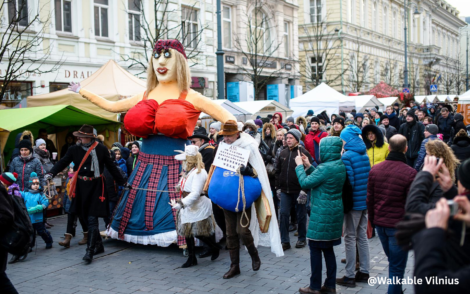
Lithuania’s Mardi Gras celebration, known as “Užgavėnės,” brings ancient traditions to life. The Open Air Museum in Rumšiškės (80 km from Vilnius) hosts the country’s largest celebration, featuring traditional pancakes, mask-making workshops, folk dances, games, and colorful processions. Visitors can craft masks to transform into witches, bears, goats, or storks—characters rooted in centuries-old customs.
St. Casimir Fair (Vilnius, March)
Celebrated for centuries, St. Casimir’s Day honors Lithuania’s patron saint with a three-day fair, typically held on the first or second weekend of March. Vilnius fills with artisan crafts, traditional food prepared in open-air kitchens, folk performances on multiple stages, and opportunities to engage with local craftspeople and learn about Lithuanian heritage.
Easter traditions (April)
Lithuania’s deep religious roots make Easter a significant celebration. With more than 50 churches, Vilnius becomes a focal point for Easter traditions. Nearby Trakai (30 km from Vilnius) offers traditional egg-dyeing workshops using beeswax techniques, guided by skilled educators. Learn more about Easter in the Baltics.
Pink Soup Festival (Vilnius, May)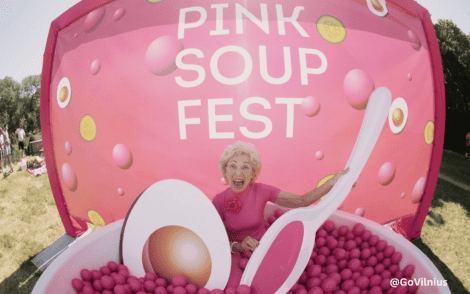
One of the most Instagram-worthy events in the Baltics, the Pink Soup Festival celebrates Lithuania’s iconic cold beet soup. In 2025, the festival attracted 93,000 visitors, and for 2026, it extends to 3 days.
Highlights include sliding 50 meters into a giant pink soup bowl, the Pink Waiters’ Marathon, creative costume competitions, a 10.5 km Pink Soup Walking Challenge, and a vibrant parade through Vilnius city center. May offers ideal spring weather, making it perfect timing for a weekend escape.
Midsummer – Joninės (June 23-24)
One of the most important celebrations in Lithuanian culture, Midsummer (Joninės or Rasos) coincides with the summer solstice and features bonfires, flower wreaths, music, and ancient rituals relating to fertility and renewal. Like Latvia and Estonia, this pre-Christian celebration has deep pagan roots and remains widely celebrated today.
Traditional celebrations include:
- Bonfires and jumping over flames: The bravest participants leap over fires for good luck and purification
- Flower wreaths: Young women weave wreaths from wildflowers and grasses, then float them on rivers with wishes
- Searching for the fern flower: At midnight, couples venture into forests seeking this mythical bloom said to bring eternal happiness
- Traditional dances and songs: Communities gather on hilltops (like Kernavė) for folk performances around bonfires
- Fortune-telling rituals: Various customs for predicting the future, especially regarding love and marriage
- Staying awake through the shortest night: Celebrations continue until sunrise to honor the sun’s power
In places like Kernavė, visitors can witness and participate in traditional dances and songs on ancient hilltop sites. The celebration combines spiritual significance with joyful community gathering, offering both city-based programs with evening events and countryside escapes into nature.
Christmas in the Vilnius (December)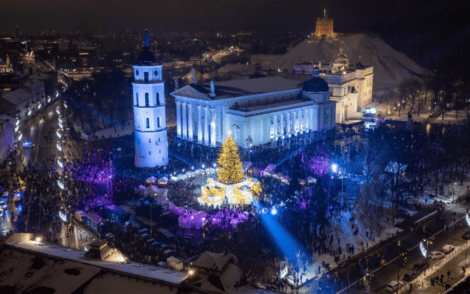
Vilnius earned the title European Capital of Christmas 2025, known for its spectacular Christmas tree designs that regularly capture international attention. The city transforms into a winter wonderland with Christmas markets, festive concerts, and the traditional Christmas Eve dinner featuring 12 meat-free dishes, including fish preparations, poppy milk, and kūčiukai (yeast dough cookies). Each dish carries cultural significance, accompanied by stories and ancient traditions. Discover more about Christmas celebrations in the Baltics.
Latvia: opera & Līgo magic
Easter in Latvia (April)
Latvian Easter combines Christian and ancient rituals—swinging in wooden swings to ward off evil, egg-cracking games, and eggs dyed with natural materials like onion skins and moss. Traditional dishes like Paska and baked lamb reflect authentic Latvian culinary heritage.
Riga Opera Festival (June, annually)
The Latvian National Opera presents top-level opera and ballet productions each June, offering performances comparable to Vienna or Milan. The festival attracts culturally sophisticated travelers and can be combined with other music events taking place in Riga or Jurmala for comprehensive Latvia cultural experience. Beyond performances, visitors can enjoy behind-the-scenes tours and private concerts at cultural venues.
Līgo/Jāņi – Midsummer Celebration (June 23-24)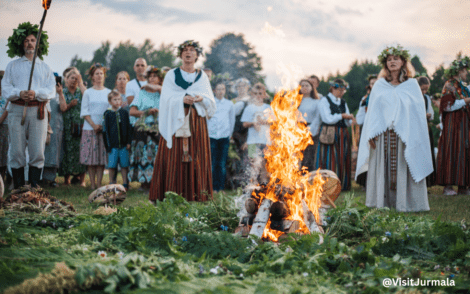
Latvia’s most important holiday, Jāņi (also called Līgo), celebrates the summer solstice with both days recognized as national holidays. Key traditions include singing folk songs with the “līgo” refrain throughout the night, wearing flower crowns (women) and oak leaf wreaths (men), lighting bonfires and jumping over them, and eating traditional Jāņu siers (caraway cheese) with beer. Herbs collected on Midsummer are believed to have special healing powers—hence the alternative name “Herb Day” (Zāļu diena). Cities empty as Latvians head to the countryside to celebrate with family, staying awake through the shortest night to greet the sunrise.
Christmas in Riga (December)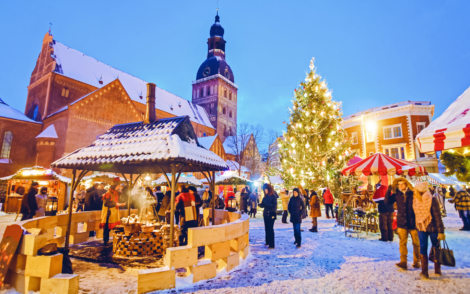
Many Latvians believe Riga is the birthplace of the Christmas tree. The Christmas market at Dome Square enchants with festive decorations, the House of the Blackheads, St. Peter’s Church, and the Art Nouveau district. The “European Christmas” festival features concerts with music by Bach, Handel, Mozart, and jazzy Christmas carols.
Nearby Jurmala (30 km away) offers spa retreats, while Kemeri National Park provides peaceful winter nature walks. The Laima Chocolate Museum adds sweet memories to any Christmas visit.
Estonia: medieval atmosphere & Nordic traditions
Easter in Estonia (April)
Estonian Easter focuses on quiet family time, egg games, and spring walks. Traditional folk customs include decorating birch branches and predicting weather based on Easter sunrise, offering a peaceful Nordic celebration.
Jaanipäev – Midsummer celebration (June 23-24)
Midsummer, known as Jaanipäev in Estonia, is considered the country’s most important holiday—surpassing even Christmas. The celebration occurs on June 23rd (Jaaniõhtu/Midsummer Eve) and June 24th (Jaanipäev proper), both national holidays, coinciding with the summer solstice.
Pre-dating Christianity by centuries, Jaanipäev marks the agricultural transition between spring sowing and summer haymaking. Since 1919, the celebration has been merged with Victory Day (Võidupüha), commemorating Estonia’s defeat of German troops in the War of Independence, linking bonfires with ideals of freedom and national identity.
Traditional celebrations include:
- Lighting massive bonfires (jaanituli) and jumping over them for prosperity and good luck—the bigger the fire, the further mischievous spirits stay away
- Gathering in nature: Tallinn and other cities become strangely quiet as locals flock to countryside summer cottages
- Food and feasting: Grilled meats, potato salad (kartulisalat), Estonian black bread (must leib), pickles (hapukurgid), fresh berries, and beer
- Traditional sauna experiences, often followed by jumping into cold lakes or the Baltic Sea
- Searching for the fern flower: Couples venture into forests seeking this mythical bloom (ferns don’t actually flower, making it a quest for the impossible)
- Fortune-telling traditions: Young women collect nine different flowers to place under pillows, hoping for predictive dreams about future spouses
- Singing, dancing, and folk games continuing through the short night until sunrise
Public celebrations feature folk music, traditional dancing, concerts, and community bonfires. The Estonian Open Air Museum in Tallinn offers authentic historical celebrations recreating how Midsummer was celebrated in centuries past.
Birgitta Festival (Tallinn, August, biannually)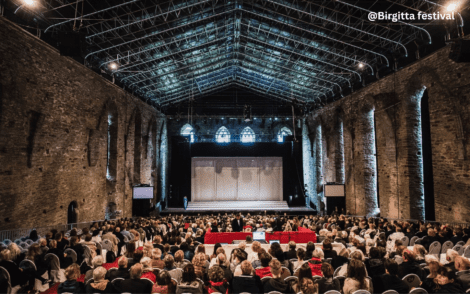
Opera and classical music performances take place in the atmospheric ruins of St. Bridget’s Convent, creating an unforgettable fusion of music and medieval architecture. Tallinn’s compact, walkable Old Town makes it easy to combine evening performances with daytime explorations of the medieval city.
Christmas in Tallinn (December)
Tallinn’s Old Town Christmas market offers medieval atmosphere with traditional crafts, mulled wine, and gingerbread. The city features St. Olaf’s Church, Kiek in de Kök, Toompea Castle, and Viru Gate, alongside trendy districts like Telliskivi, Noblessner, and Rotermann.
The Estonian Open Air Museum presents a Christmas village experience with ancient winter games and traditions from the late 19th to early 20th century. Some accommodations in Estonian castles and manors offer spa experiences, traditional saunas, and the opportunity to jump into the ice-cold Baltic Sea.
Tall Ships Races – Tallinn (2028 m.)
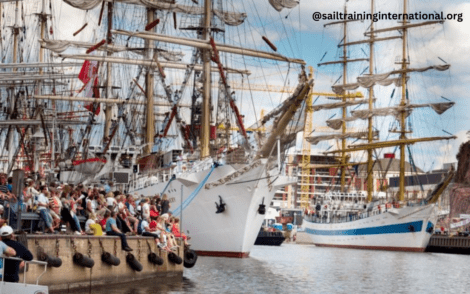
This globally recognized sailing event brings historic tall ships against Tallinn’s medieval skyline. The celebration combines maritime culture, festivals, and open-air activities, creating a once-in-a-generation event that attracts visitors from across Europe.
Year-round Baltic celebrations
The Baltic States offer distinctive cultural experiences throughout the year:
- February: Valentine City Break (Lithuania), Mardi Gras (Užgavėnės in Lithuania)
- March: St. Casimir Fair (Lithuania)
- April: Easter traditions across all three countries
- May: Pink Soup Festival in Vilnius (3 days in 2026!)
- June: Midsummer/Summer Solstice (the most important celebration in all three Baltic countries—Joninės in Lithuania, Līgo/Jāņi in Latvia, Jaanipäev in Estonia), Riga Opera Festival
- August: Birgitta Festival (Tallinn)
- December: Christmas markets in Vilnius (European Christmas Capital 2025), Riga, and Tallinn
- 2028: Tall Ships Races in Tallinn
Each celebration offers authentic cultural immersion, hands-on workshops, traditional meals, and participation in living customs that have been passed down through generations. From jumping over Midsummer bonfires to painting eggs with beeswax, from experiencing 12 Christmas Eve dishes to sliding into a giant pink soup bowl—the Baltics deliver experiences found nowhere else in Europe.